Home›Why Traditional Banks Are Losing the War Against F…
Why Traditional Banks Are Losing the War Against Fintech
EEditorial Team2026-08-28👁 506 views
Share:✅ Copied!
Why Traditional Banks Are Losing the War Against Fintech
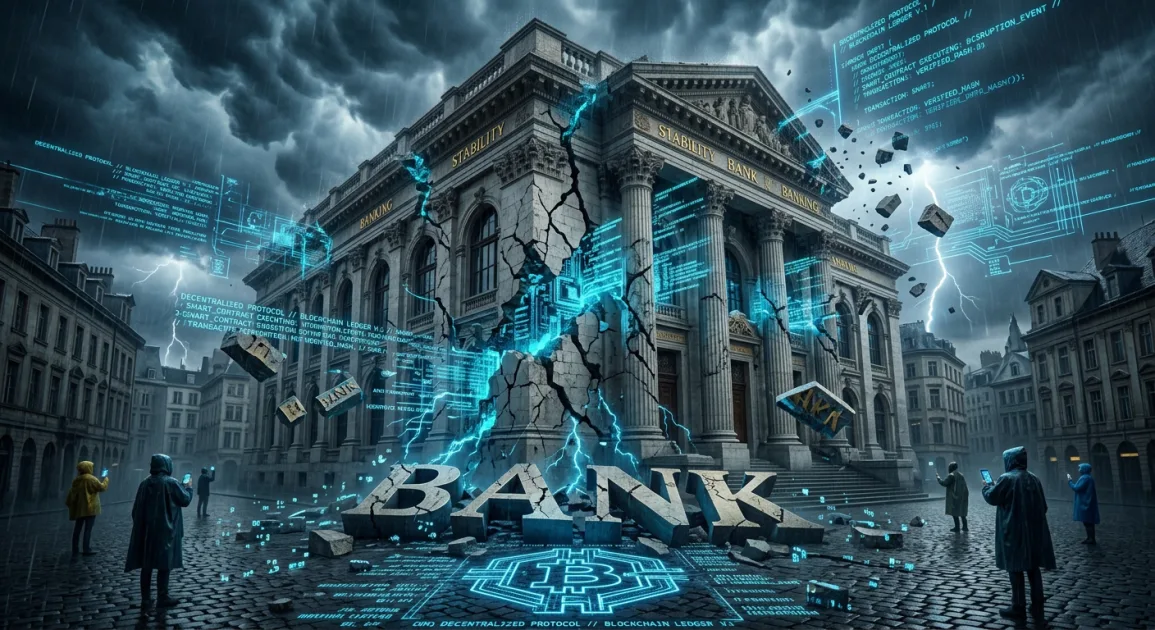
Walk into a bank branch today and look around carefully. The queue is shorter than it was ten years ago. The tellers are fewer. The forms are thicker but the patience of the people filling them out is thinner. Something fundamental is shifting in the relationship between ordinary people and the institutions that hold their money — and the banks losing that relationship may never get it back.
The global banking industry entered 2026 facing what Deloitte called a perfect storm — macro headwinds, AI disruption, stablecoin competition, and rapidly rising customer expectations all hitting at the same time. The banks that act boldly this year will shape the future of finance. The ones that do not may spend the next decade wondering where their customers went.
📰 Next Article
Thai Lottery Win & Divorce Settlement — Who Gets the Money?
Thai Lottery Win & Divorce Settlement — Who Gets the Money?
A Thai Government Lottery win should be one of the happiest moments of your life. But when a marriage is falling apart at the same time, that winning ticket can instantly become the most contested asset in your entire divorce settlement. Family courts across the United States, United Kingdom, Australia, and Canada are increasingly dealing with exactly this situation — and the legal outcomes shock most lottery winners completely.
The core legal question is straightforward but the answer is anything but simple. Does a Thai lottery win count as marital property? Can your spouse legally claim half of your winnings? And what happens if you won the lottery before filing for divorce but received the payout after separation? These questions are now being decided in family courts across multiple co...
AI Could Unlock $340 Billion for Banks — If They Move Fast Enough
Analysts estimate that generative AI could unlock up to $340 billion of annual value for global banks — roughly three to five percent of total industry revenues. That is an almost unimaginable number, and it represents everything from faster loan processing to smarter fraud detection to personalized financial advice delivered at scale without human advisors.
JPMorgan CEO Jamie Dimon put it bluntly. He warned that there will be no job, no function, and nothing in banking that AI will not affect — and that banks must use the technology to do a better job or be left behind. Coming from the leader of the world's most powerful bank, that is not a prediction. It is a warning from someone who has already seen the internal data.
The problem is that most banks are stuck. Deloitte's 2026 banking outlook found that the majority of banks are still in the experimentation phase with AI — running pilots, testing chatbots, exploring use cases in isolation. They have not made AI a core infrastructure decision. And while they experiment, fintech companies that were built on AI from day one are eating their lunch one product at a time.
The Bank Run Risk Nobody Is Talking About Loudly Enough
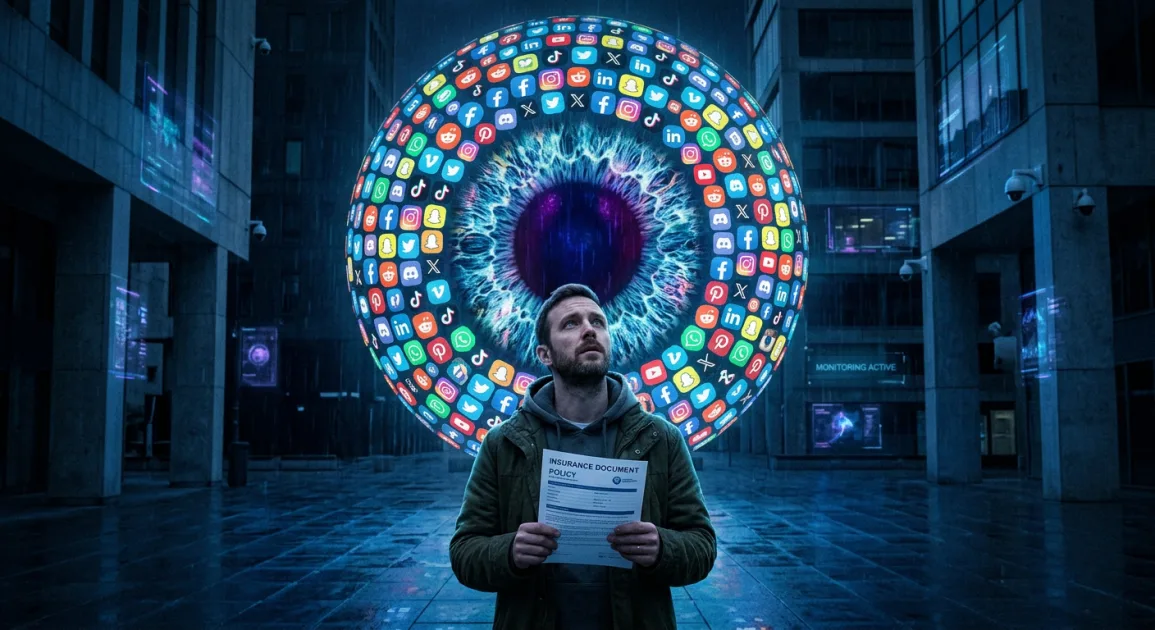
In 2023, Silicon Valley Bank collapsed in 48 hours. Social media spread rumors about its financial health. Mobile banking apps let customers withdraw everything with a single tap. By the time regulators fully understood what was happening, billions had already left. The speed was unlike anything in banking history.
The IMF published a sobering analysis warning that AI and mobile banking technology have fundamentally changed the speed at which a bank run can happen. In previous financial crises, banks had days to find alternative funding or sell assets. Today, a credible rumor on social media combined with a mobile app can drain a bank before it can respond. The safeguards that protected the financial system for decades were designed for a slower world.
This is not a theoretical risk. It is a structural vulnerability that regulators in the US, EU, and UK are actively working to address — but the technology moves faster than regulation, and the gap between them is where the next financial crisis is most likely to begin.
Embedded Finance Is Making Banks Invisible — and Replaceable
The most dangerous trend for traditional banks in 2026 is one that most customers barely notice. Embedded finance is the integration of financial services directly into non-financial platforms. You get a loan at the checkout screen of an e-commerce site. You get insurance when you book a flight. You get a savings product inside a payroll app.
In each of these cases, a bank may be providing the underlying financial product — but the customer never sees the bank. They see the e-commerce platform, the airline, the payroll app. The bank becomes invisible infrastructure. And invisible infrastructure can be replaced by different invisible infrastructure without the customer noticing or caring.
This is the existential threat that keeps banking strategists awake at night. Not that customers will dramatically leave banks — but that they will simply stop thinking about them, stop feeling loyal to them, and stop noticing when they are quietly replaced by something else entirely.
What Needs to Happen Before It Is Too Late
The banks that will survive the current disruption are the ones making three moves simultaneously right now. First, they are treating AI as core infrastructure — not a pilot project but a fundamental operating system decision that touches every part of the business. Second, they are building or partnering into embedded finance ecosystems so they remain relevant even when they are invisible. Third, they are moving aggressively into digital assets and stablecoin infrastructure before that market develops completely outside their control.
The traditional bank is not dead. But the traditional bank that does nothing different in 2026 is making a bet that the world will slow down and wait for it to catch up. That bet has never paid off in the history of technology disruption. And there is no reason to believe 2026 will be the exception.